
Acupuncture for TMJ & Jaw Pain
TMJ & Jaw Pain Treatment
Acupuncture and massage therapy for TMJ and jaw pain in Los Angeles. Nature Acupuncture & Herbs treats jaw tension, clicking, grinding, and bite dysfunction with evidence-based integrative care.
- What it is
- Pain, clicking, or limited motion of the temporomandibular joint, often involving the muscles of mastication and presenting as jaw, ear, or temple pain.
- Common causes
- Chronic clenching or grinding, stress-driven jaw tension, dental work, whiplash, and trigger points in the masseter and temporalis muscles.
- How we treat it
- Acupuncture deactivates trigger points in the masticatory muscles while massage therapy releases the surrounding fascia, allowing the joint to track more normally.
About This Condition
TMJ disorder affects an estimated 10 to 15 percent of American adults, and most of them are told to wear a night guard, take ibuprofen, and wait it out. That works for some people. For the rest, the pain creeps back, the jaw still clicks, and morning headaches keep coming. Acupuncture and clinical massage offer a different angle on the same problem, addressing the muscular and neurological drivers of TMJ instead of just guarding against the symptom at night.
At Nature Acupuncture & Herbs, we treat the masseter, temporalis, lateral pterygoid, and suboccipital muscles directly with both needling and targeted manual therapy. The combination usually outperforms either approach alone, especially for TMJ that has a strong tension component, which is most of it.
How Does Acupuncture Help TMJ & Jaw Pain?
TMJ pain is muscular far more often than it is structural. The temporomandibular joint itself is rarely the primary issue. The pain comes from chronically activated masseter and temporalis fibers, restricted lateral pterygoid function, and trigger points that refer pain into the ear, temple, and behind the eye. Acupuncture deactivates those trigger points directly. A 2017 systematic review in BMC Complementary Medicine of seven RCTs found that acupuncture produced a clinically meaningful reduction in TMJ pain intensity compared to control conditions, with effects persisting at follow-up.
Massage therapy plays a different role. It works on the surrounding fascial and muscular structures that hold the dysfunction in place. Direct intraoral massage of the masseter and pterygoid muscles releases tissue that a needle alone cannot fully reach. When we combine the two approaches, the masticatory muscles tend to reset to a longer resting length, and the clicking, popping, and bite-misalignment symptoms ease as a downstream effect.
What to Expect at Nature Acupuncture
Your first visit includes an assessment of jaw range of motion, palpation of the masticatory muscles, and a check for trigger point referral patterns. Treatment usually combines facial and scalp acupuncture with extraoral massage of the jaw and neck, plus needling of distal points known to influence the head and face. Sessions run 60 to 90 minutes. Most patients with chronic TMJ feel a meaningful difference within 3 to 5 sessions. Acute TMJ from a recent injury or dental procedure can resolve in 2 to 4 visits.
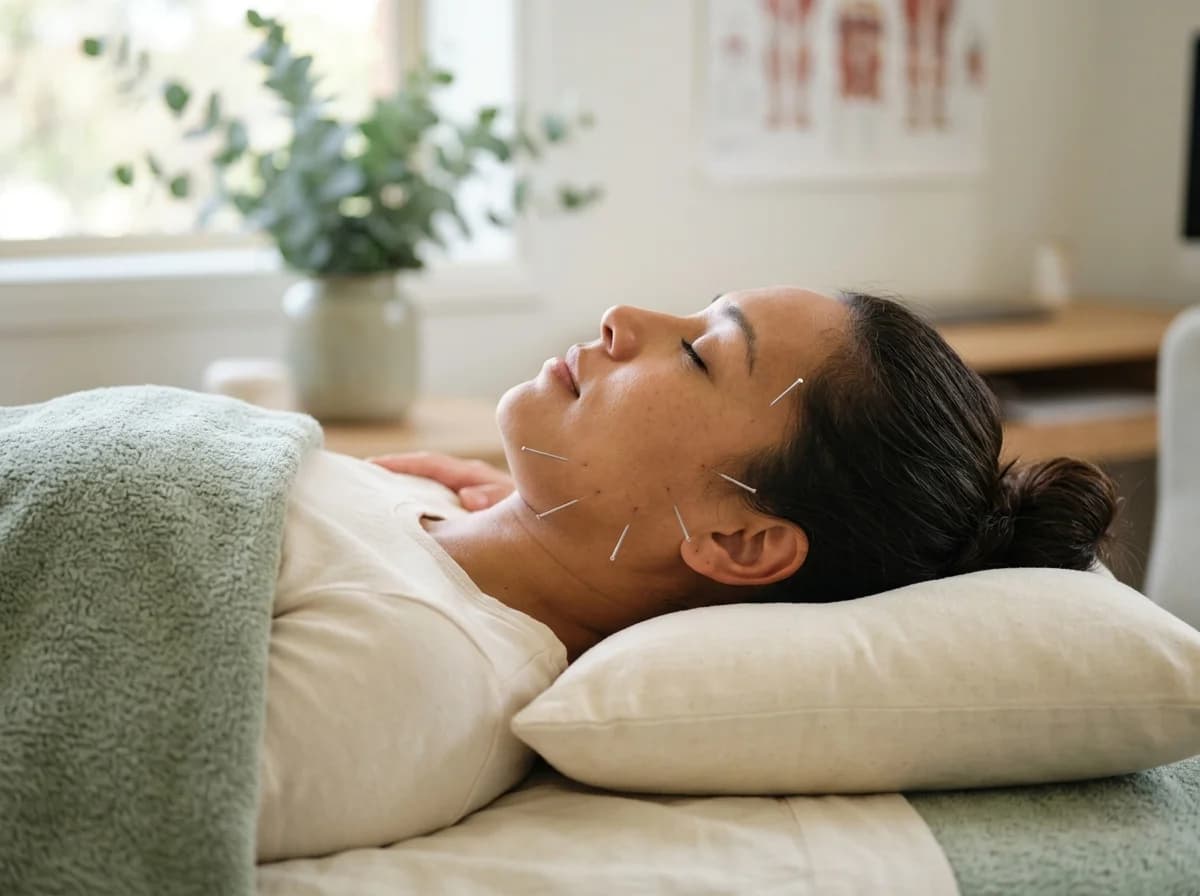
Acupuncture for TMJ & Jaw Pain
Available at all three Los Angeles locations - West LA, Hawthorne, and Lynwood.
Book an AppointmentVerify Your InsuranceRelated Services
Common Questions
Frequently Asked Questions
Can acupuncture really help TMJ?
Yes. Multiple randomized trials show that acupuncture reduces TMJ pain intensity and improves jaw mobility, with effects that persist beyond the treatment course. A 2017 BMC Complementary Medicine review concluded that acupuncture is more effective than sham acupuncture for TMJ and at least as effective as conventional dental therapies like occlusal splints.
How does massage help TMJ pain?
TMJ pain is driven largely by chronic tension in the muscles of mastication: masseter, temporalis, lateral and medial pterygoid. Direct release of these muscles, including intraoral work when appropriate, is one of the most effective interventions available. The intervention itself is well-established. The dispute in the field is mostly about who is qualified to perform it.
Do I need to keep wearing my night guard during treatment?
Usually yes, at least during the active treatment phase. The night guard protects your teeth from the mechanical wear of grinding. It does not treat the underlying muscular tension. We coordinate with your dentist when relevant, especially if you are considering moving away from the guard later.
What about the clicking and popping in my jaw?
Clicking comes from the articular disc moving out of its normal position relative to the mandibular condyle. Released muscles often allow the disc to track more normally, and the clicking decreases or stops. Persistent clicking after the pain resolves is usually benign and does not require intervention on its own.
How long until I notice a difference?
Most patients notice a meaningful reduction in jaw pain and morning soreness within 3 to 5 sessions. Range of motion typically improves alongside. The full course for chronic TMJ is usually 8 to 12 weekly sessions, followed by maintenance every 4 to 6 weeks as needed.
Related Conditions
You may also be interested in
3
LA Locations
10+
Years Experience
Most
Insurance Accepted
Ready to Treat Your TMJ & Jaw Pain?
Book a new patient consultation at any of our three Los Angeles locations.