
Acupuncture for Hamstring & Muscle Strains
Hamstring & Muscle Strains Treatment
Acupuncture and sports medicine for hamstring strains and muscle injuries in Los Angeles. Nature Acupuncture & Herbs treats acute and chronic muscle strains with evidence-based integrative care to speed recovery and prevent reinjury.
- What it is
- Acute or chronic muscle strain, most commonly affecting the hamstrings, quadriceps, calf, or adductors, graded 1 through 3 by severity.
- Common causes
- High-velocity sprinting, sudden direction change, eccentric overload, insufficient warm-up, biomechanical asymmetries, and inadequate recovery from prior strain.
- How we treat it
- Acupuncture controls pain and supports early healing; sports massage manages soft tissue recovery; a phased loading program rebuilds load tolerance and reduces reinjury risk.
About This Condition
Hamstring strains are among the most common injuries in sprinting and field sports, and they have one of the highest recurrence rates of any musculoskeletal injury. The reinjury rate within a year is 12 to 33 percent depending on the sport, mostly because athletes return to play before the muscle has fully recovered its tensile and neuromuscular function. Calf, quad, adductor, and groin strains follow similar patterns. The acute injury heals on a predictable biological timeline. The neuromuscular and load-tolerance recovery takes longer than most people expect.
At Nature Acupuncture & Herbs, we treat acute muscle strains with a phased protocol designed around the biological stages of muscle healing. Acupuncture handles pain and the autonomic recovery from acute injury, sports massage works through the surrounding soft tissue and supports lymphatic drainage, and a graded loading program rebuilds the muscle's resistance to the loads that caused the strain in the first place.
How Does Acupuncture Help Hamstring & Muscle Strains?
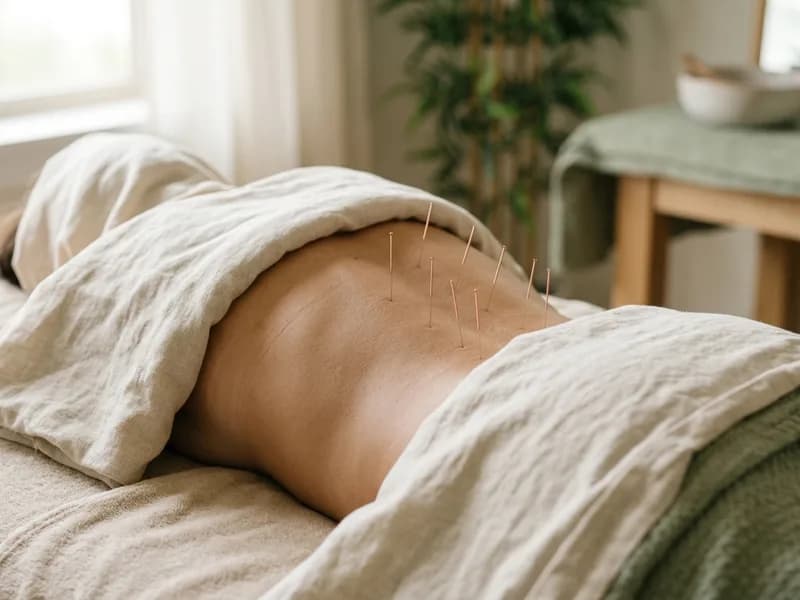
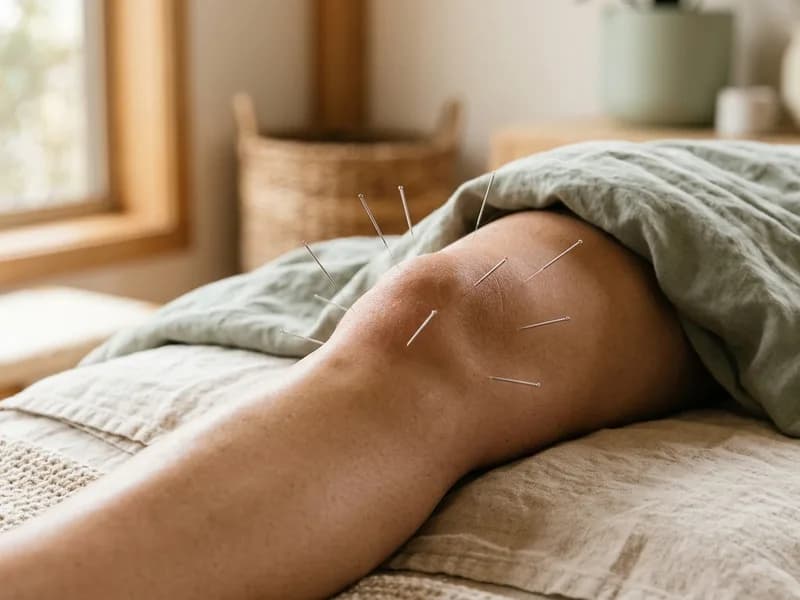
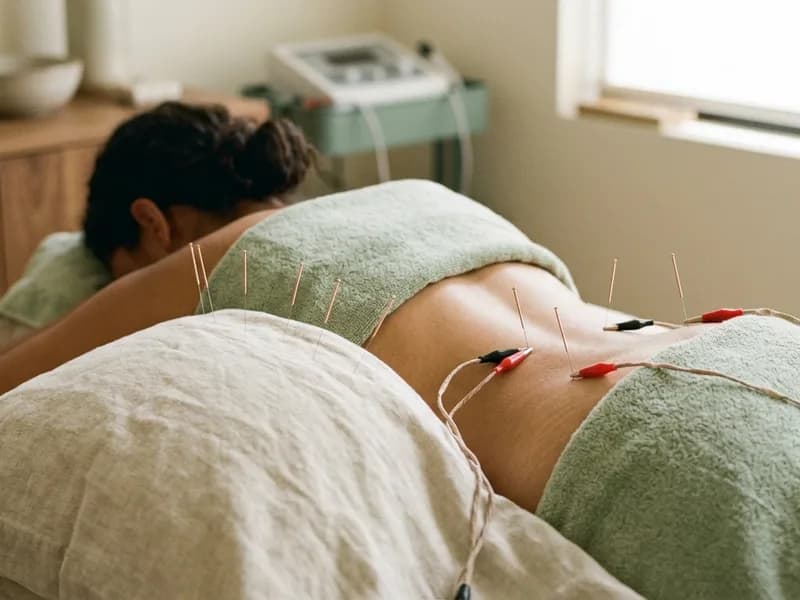
In the first 1 to 5 days after a grade 1 or 2 hamstring strain, acupuncture reduces the local inflammatory response, improves pain control without needing high-dose NSAIDs (which may impair early healing), and accelerates lymphatic clearance of the post-injury hematoma. A 2017 randomized trial in the Journal of Sport Rehabilitation followed 50 athletes with grade 1 to 2 hamstring strains randomized to acupuncture plus standard rehabilitation versus standard rehabilitation alone. The acupuncture group returned to sport an average of 7 days earlier with comparable reinjury rates at 6 months.
In the subacute and remodeling phases (1 to 6 weeks), the work shifts to massage and tuina along the affected muscle and the kinetic chain, plus a progressive loading program. Reinjury prevention is the entire point of the late-phase work. The Nordic hamstring exercise, in particular, has been shown to reduce hamstring strain incidence by 60 percent in field-sport athletes. We integrate that and similar protocols into every late-phase recovery.
What to Expect at Nature Acupuncture
First visit for an acute strain includes a clinical exam to confirm the grade, an ultrasound referral if a grade 3 is suspected, and a discussion of training context and return-to-play timeline. Treatment in the first week focuses on pain control and early healing. Sessions move to deeper soft tissue work and loading in weeks 2 to 4. Late-phase work focuses on neuromuscular drills and high-velocity loading before return to sport. Sessions run 60 to 75 minutes. Realistic return to sport for grade 2 hamstring strain is 4 to 8 weeks; grade 1 is 1 to 3 weeks; grade 3 may require surgical consultation.

Acupuncture for Hamstring & Muscle Strains
Available at all three Los Angeles locations - West LA, Hawthorne, and Lynwood.
Book an AppointmentVerify Your InsuranceRelated Services
Common Questions
Frequently Asked Questions
When should I get an MRI?
Most grade 1 and 2 strains do not need imaging. A high-grade strain with significant weakness, an audible pop at the time of injury, or a palpable defect should be imaged. We refer for ultrasound or MRI when the exam suggests a grade 3 tear.
How soon can I run?
For a grade 1 hamstring strain, light jogging is usually safe at 7 to 14 days. Grade 2 typically waits 3 to 4 weeks for jogging and 5 to 6 weeks for full-speed sprinting. Returning to full speed before the muscle has rebuilt its high-velocity load tolerance is the main reinjury risk factor.
Why do hamstring strains keep coming back?
Three main reasons: incomplete recovery of high-velocity load tolerance, persistent neuromuscular inhibition of the injured muscle, and biomechanical contributors that were not addressed in the original recovery. The Nordic hamstring exercise and other targeted late-phase work address all three.
Should I use ice or heat?
Current evidence favors compression and elevation in the first 24 to 48 hours, with ice for symptomatic comfort if it helps. Heat is fine after 72 hours and can be useful before a rehabilitation session. The old RICE protocol has been updated by most sports medicine practices to emphasize early protected loading over prolonged rest.
Can I do anything to prevent the next one?
Yes. A consistent Nordic hamstring program reduces hamstring strain incidence by about 60 percent in athletes. Adding a few minutes of high-velocity work to your training week (sprinting drills, eccentric exposure) is the second most effective preventive measure. We include both in late-phase recovery and ongoing prevention programs.
Related Conditions
You may also be interested in
3
LA Locations
10+
Years Experience
Most
Insurance Accepted
Ready to Treat Your Hamstring & Muscle Strains?
Book a new patient consultation at any of our three Los Angeles locations.